Quick Answer: A medical referral letter is a formal document written by a physician referring a patient to a specialist or another healthcare provider for further evaluation, diagnosis, or treatment. In the United States, referral letters are commonly required by HMO insurance plans and must include the patient’s clinical history, the reason for referral, current medications, and the referring physician’s contact information.
What Is a Medical Referral Letter?
A medical referral letter is the formal communication that transfers a patient’s care — fully or partially — from one healthcare provider to another. In the United States it serves two distinct functions depending on who initiates it.
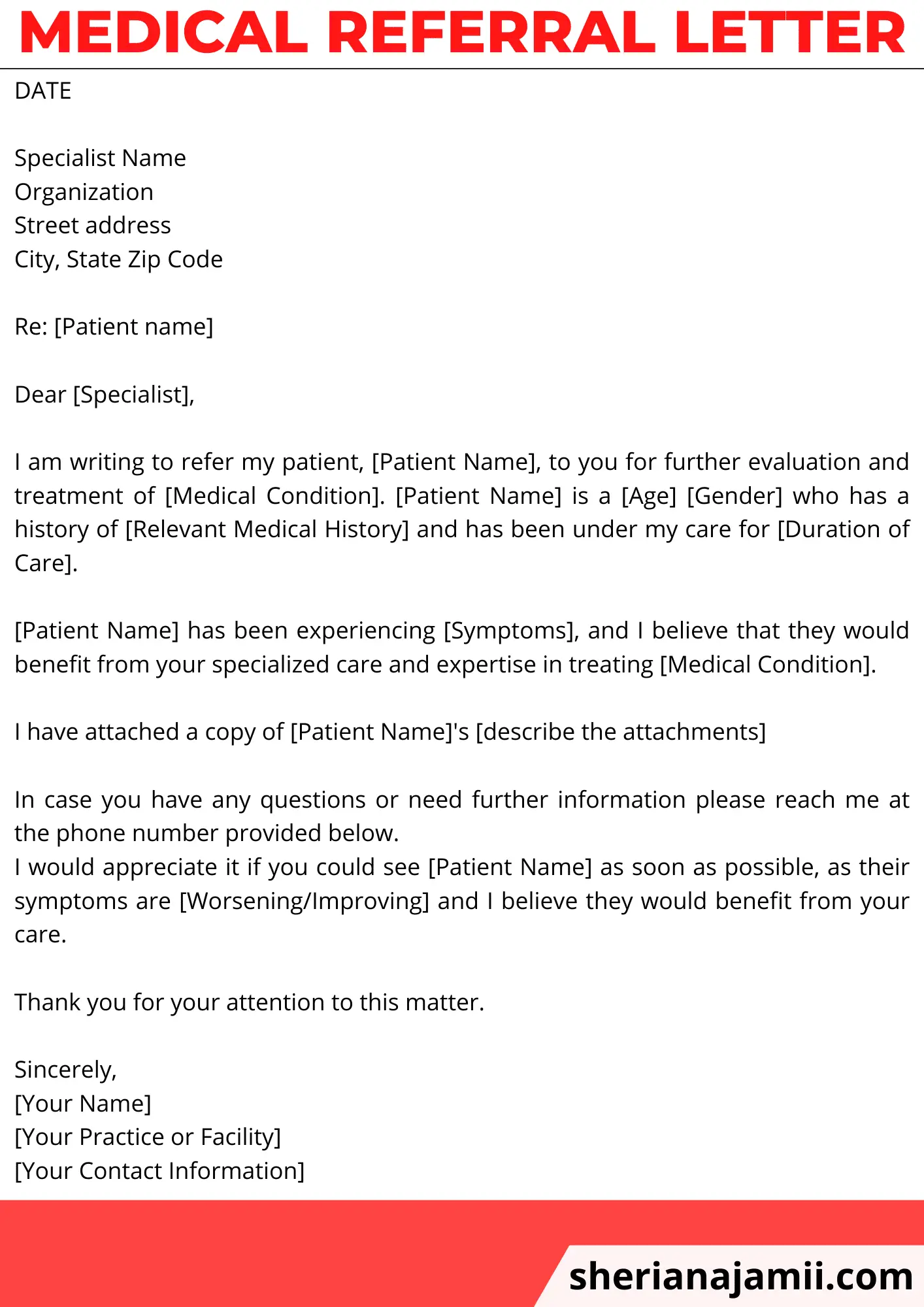
When written by a physician, it is a clinical handoff document: it summarizes the patient’s condition, explains what the referring doctor needs the specialist to evaluate, and provides enough clinical context for the specialist to prepare. When requested by a patient, it is a formal letter from their primary care provider authorizing the referral — often required by insurance companies before a specialist visit will be covered.
Medical referral letters are used across every specialty: cardiology, orthopedics, oncology, mental health, physical therapy, pediatric specialists, and more. Getting the format and content right is critical — a poorly written referral can delay specialist appointments, trigger insurance denials, or result in the specialist receiving insufficient information to help the patient effectively.
How Medical Referrals Work in the USA — Insurance Basics
HMO plans almost always require a formal referral from your primary care physician before you can see a specialist. Without it, the specialist visit may not be covered. PPO plans generally do not require a formal referral, though you may pay a higher copay for out-of-network visits. Prior authorization is different from a referral — it is a separate approval from your insurance company confirming they will cover the proposed treatment.
According to the National Institutes of Health, structured referral letters that include complete clinical information significantly reduce delays, duplicate testing, and miscommunication between providers.
What Must a Medical Referral Letter Include?
- Patient information — full name, date of birth, insurance ID, and contact details
- Referring provider information — name, credentials, practice name, address, phone, fax, and NPI number
- Specialist or receiving provider — name, specialty, and facility
- Date and urgency level — routine, urgent, or emergency
- Reason for referral — the specific clinical question for the specialist
- Relevant medical history — diagnoses, prior treatments, surgical history, allergies
- Current medications and dosages — including over-the-counter medications and supplements
- Recent test results and imaging — labs, X-rays, MRIs, ECGs
- Physical examination findings — pertinent positives and negatives
- Insurance and authorization information — referral authorization number if pre-approved
- Referring provider signature
The Heidi Health clinical writing guide notes that incomplete referral letters are one of the leading causes of specialist appointment delays.
Medical Referral Letter Samples — 5 USA Templates
Sample 1: Primary Care to Specialist (General)
[Physician Name, Credentials]
[Practice Name]
[Address] | [Phone] | [Fax] | NPI: [XXXXXXXXXX]
[Date]To: [Specialist Name, Credentials]
[Specialty] — [Practice/Hospital Name]Re: [Patient Full Name] | DOB: [MM/DD/YYYY] | Insurance ID: [XXXXXXXXX]
Dear Dr. [Specialist’s Last Name],
I am referring my patient, [Patient Name], a [age]-year-old [male/female], for specialist evaluation of [chief complaint or condition].
Reason for Referral: [Specific clinical question]
Relevant History: [Pertinent medical history, prior diagnoses, relevant surgeries]
Current Medications: [List medications with dosages]
Recent Test Results: [Relevant labs, imaging findings]
Urgency: [Routine / Urgent / Emergency]
The patient is expecting your office to contact them to schedule. Please reach me at [Phone/Fax] with any questions.
Sincerely,
[Physician Signature]
[Printed Name, Credentials]
Sample 2: Urgent Cardiology Referral
[Referring Physician Name, MD]
[Primary Care Practice]
[Contact Details] | NPI: [XXXXXXXXXX]
[Date]To: Cardiology Department
[Hospital / Cardiology Group Name]Re: [Patient Name] | DOB: [MM/DD/YYYY] | Insurance: [Plan Name, ID]
Dear Cardiology Team,
I am urgently referring [Patient Name], a [age]-year-old with a history of [relevant conditions], for evaluation of [new-onset atrial fibrillation / exertional chest pain / specify].
Presenting Concern: Patient presents with [symptoms: onset, duration, severity]. ECG dated [date] demonstrates [findings]. BNP: [value]. Troponin: [value/negative].
Medications: [Current cardiac and other medications]
Urgency: URGENT — please schedule within [X] days. Insurance authorization number: [XXXXXX].
Sincerely,
[Physician Signature]
[Name, Credentials]
Sample 3: Mental Health / Psychiatry Referral
[Referring Provider Name, Credentials]
[Practice Name]
[Phone] | [Fax] | NPI: [XXXXXXXXXX]
[Date]To: [Psychiatrist / Therapist Name]
[Practice Name]Re: [Patient Name] | DOB: [MM/DD/YYYY]
Dear [Provider Name],
I am referring [Patient Name] for psychiatric evaluation. The patient is a [age]-year-old who presents with [symptoms] that have not adequately responded to [current treatment].
Clinical Summary: [Brief relevant psychiatric and medical history]
Current Medications: [List]
Reason for Referral: Diagnostic clarification and/or initiation of [psychotherapy / medication management / both].
Safety Screening: PHQ-9 score: [X/27]. Patient denies active suicidal or homicidal ideation at time of this letter.
Sincerely,
[Physician Signature]
[Name, Credentials]
Sample 4: Pediatric Specialist Referral
[Referring Pediatrician Name, MD]
[Pediatric Practice Name]
[Contact Details] | NPI: [XXXXXXXXXX]
[Date]To: [Pediatric Specialist Name]
[Specialty] — [Hospital / Practice Name]Re: [Child’s Full Name] | DOB: [MM/DD/YYYY] | Age: [X years] | Parent/Guardian: [Name]
Dear Dr. [Specialist],
I am referring [Child’s Name], a [age]-year-old, for evaluation of [chief complaint and duration].
Developmental History: [Relevant perinatal history, milestones, immunization status]
Clinical Course: [Summary of symptoms, prior evaluations, treatments tried]
Medications and Allergies: [List]
Specific Question for Specialist: [What you need the specialist to evaluate or advise on]
Insurance: [Plan, ID, Authorization #]. Parent will contact your office to schedule.
Sincerely,
[Physician Signature]
[Name, Credentials]
Sample 5: Patient-Requested Referral Letter (For Insurance)
[Physician Name, Credentials]
[Practice Name] | [Contact Details]
[Date]To: [Insurance Company / Specialist’s Office]
Re: Referral Authorization — [Patient Name] | DOB: [MM/DD/YYYY] | Member ID: [XXXXXXX]
To Whom It May Concern,
I am formally referring my patient, [Patient Name], to [Specialist Name / Specialty] for evaluation of [condition].
This referral is medically necessary based on the following: [Brief clinical justification — symptoms, duration, treatments tried, why specialist evaluation is required].
I request authorization for [number] specialist visit(s) with [Specialist Name], NPI [XXXXXXXXXX], effective [date].
Please contact my office at [phone] if additional information is required.
Sincerely,
[Physician Signature]
[Name, Credentials, NPI]
For related correspondence, see guides on letters of medical necessity and medical clearance letters.
How to Request a Medical Referral as a Patient
- Call your PCP’s office and explain you need a referral to a specific specialist. Have your insurance information ready.
- Know your plan’s requirements. HMO plans require the referral before your specialist visit. Confirm with your insurer.
- Ask for the referral in writing. Request it be sent directly to the specialist’s office with a copy to you.
- Follow up on authorization. Call your insurer to confirm approval before scheduling your specialist appointment.
- Bring documentation to your specialist visit. Carry your referral authorization number, insurance card, and any recent test results.
If you also need to request your medical records during this process, Sheria na Jamii’s guide on requesting medical records has ready-to-use templates.
Frequently Asked Questions About Medical Referral Letters
Do I need a referral to see a specialist in the United States?
It depends on your insurance plan. HMO plans almost always require a PCP referral before a specialist visit is covered. PPO plans generally do not. Check your specific plan’s requirements before booking.
How long does a medical referral take?
A routine referral typically takes 1 to 3 business days. Insurance prior authorization can add 3 to 10 additional business days. Urgent referrals can often be processed same-day. Plan ahead — do not wait until symptoms become severe.
Can a nurse practitioner or physician assistant write a referral?
Yes. In most U.S. states, NPs and PAs serving as primary care providers can write referral letters. Whether your insurance accepts these depends on your plan — some require an MD or DO signature for authorization.
What is the difference between a referral and prior authorization?
A referral is your doctor’s clinical recommendation to see a specialist. Prior authorization is your insurer’s financial approval to cover the visit or procedure. Some plans require both; confirm with your insurer before the appointment.
What if my referral is denied by insurance?
You have the right to appeal. Ask for the denial reason in writing, then have your doctor submit additional documentation supporting the medical necessity. Most states have a formal appeals process, and the Affordable Care Act provides additional patient protections.
How is a referral letter different from a letter of medical necessity?
A referral letter sends a patient to a specific provider for evaluation. A letter of medical necessity justifies a specific treatment or equipment to the insurer. You may need both — a referral to reach the specialist, and a letter of medical necessity to get the treatment covered.
Can patients write their own referral letter?
No. A medical referral must come from a licensed provider for insurance purposes. However, patients can write a personal letter to their doctor requesting a referral, explaining their symptoms and the specialist they’d like to see.
Final Thoughts
A well-written medical referral letter is the bridge between your primary care provider and the specialist who can deliver the next level of care. In the United States, where HMO gatekeeping and prior authorization add layers of complexity, getting this document right matters for your health and your wallet.
Use the templates above as your starting point, include all required clinical details, and always confirm your insurer has authorized the visit before your appointment date. For other medical correspondence — including letters from your doctor about your condition and medical clearance letters — explore the full collection at Sheria na Jamii.
📄 Download the Free Printable PDF Template
Get the fill-in-the-blank PDF version of this letter — ready to print, sign, and submit. No account required.
Free to download and use. Not legal advice.